
Enneagram Personality Types: Shadows, Core Fears & Growth Paths
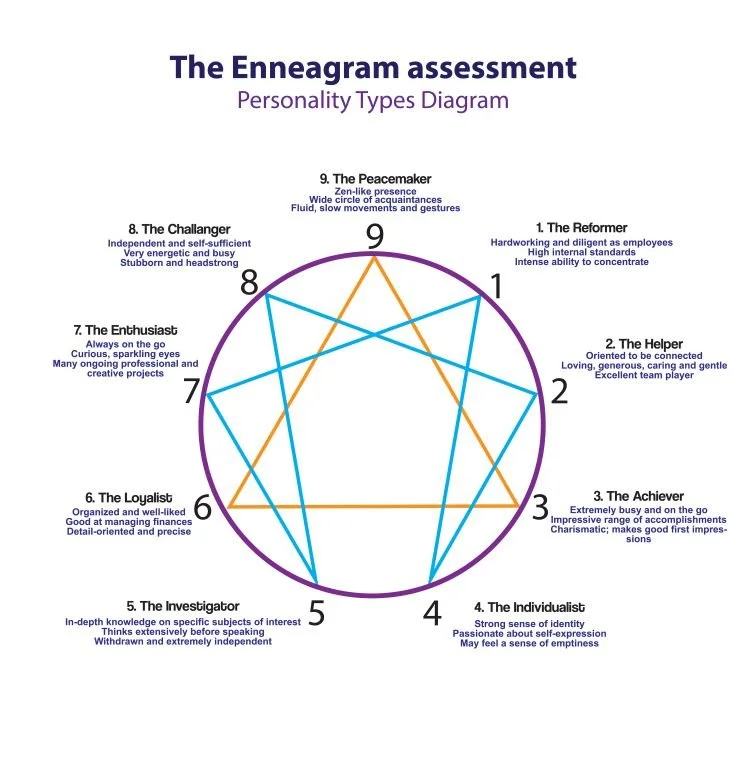
In this blog, we’re focusing on the Enneagram—a powerful tool for understanding the complexities of human personality. Whether you’ve just set out on your journey or are well-versed in the process of personal growth, the Enneagram is a powerful tool you can use to better understand your motivations, fears, desires, and behavior patterns.
The Enneagram divides personalities into nine distinct types, each with unique strengths and challenges. More than a simple label, the Enneagram is a dynamic system that helps illuminate why we act as we do and how we might cultivate more authentic and integrated behaviors.
The Nine Enneagram Types: Shadows and Growth
Although it’s common to recognize pieces of ourselves in many Enneagram types, most people have a dominant pattern that shapes how they experience life, relationships, and self-identity. Each type can express itself in a wide range of ways (from expansive and grounded to constricted and self-protective), depending on the environments we’ve lived in, the pressures we’ve adapted to, and the internal strategies we’ve developed to cope.
Growth within the Enneagram involves becoming aware of these habitual patterns, reclaiming your strengths, and intentionally shifting how your core tendencies show up in your daily life. By noticing how your dominant type responds under pressure, you can begin to see where your energy, attention, and choices are being shaped by old conditioning — and where you have the opportunity to consciously evolve.
Type 1: The Reformer
This personality type embodies high ideals, a deep sense of responsibility, and a commitment to integrity. When thriving, they personify elevated values and work to make the world a better place. When stressed, their perfectionism can become self-critical, leading to frustration and burnout.
Type 2: The Helper
This personality type shines when they’re generous, empathetic, and genuinely supporting others. When stressed, they may become overly self-sacrificing, manipulative, or overly dependent on others for validation.
Type 3: The Achiever
This personality type excels at inspiring others with their adaptability and drive. When stressed, they can become image-conscious and chase external success while disconnecting from their authentic selves.
Type 4: The Individualist
This personality type thrives in the arenas of creativity and authenticity, and offers profound emotional insight. When stressed, they may retreat into melancholy, envy, or the false belief that they are fundamentally flawed.
Type 5: The Investigator
This personality type is self-motivated, intellectually gifted, and innovative in their approach. When stressed, they can become overly secretive, detached, or stingy with their time and energy.
Type 6: The Loyalist
This personality type is deeply reliable and courageous, often forming strong, supportive bonds. When stressed, their core fear of abandonment can lead to overthinking, anxiety, and self-doubt.
Type 7: The Enthusiast
This personality type is energetic and adventurous, bringing joy and spontaneity to their lives. When stressed, their need to avoid pain and discomfort can lead to impulsivity, distraction, and escapism.
Type 8: The Challenger
This personality type produces strong, protective leaders that advocate for others and act decisively. When stressed, they may become domineering or controlling, especially when their vulnerability is activated.
Type 9: The Peacemaker
This personality type is accepting, supportive, and unifying. When stressed, they can fall into complacency or avoid confrontation while numbing themselves to their own needs and desires.
Archetypal Roles and the Stories We Tell
The Enneagram is associated with multiple archetypal roles which are often shaped by social and cultural influences. These archetypes help illuminate facets of our personality that are activated in different circumstances, allowing us a deeper understanding within a larger context.
For example, Type 4 is also known as The Romantic, The Artist, The Aesthetician, and The Melancholic, emphasizing traits like creativity, depth, and a longing for authenticity.
Type 7 may be seen as The Enthusiast, The Visionary, or The Epicure, highlighting their zest for life and love of exploration.
Type 9 is often The Peacemaker, The Mediator, or The Harmonizer, reflecting their desire to create harmony and avoid conflict.
These archetypal names highlight roles we may unconsciously adopt in relationships, families, or workplaces. Understanding these roles can help us identify the expectations we’ve internalized and how they align (or conflict), with our true selves.
Core Fears and Desires: The Engines of Personality
At the heart of the Enneagram lies each type’s core fear and core desire. These are the primary motivations that shape the behavior, decisions, and emotional responses of each type, and understanding them is essential in identifying and changing self-limiting patterns.
For example, Helpers fear being unwanted or unloved, which fuels their constant service and self-sacrifice. Their core desire is to feel loved and appreciated, but ironically, their fear of rejection can lead to patterns and behaviors that prevent authentic connection.
Investigators, on the other hand, fear helplessness and influence, which drives them to seek knowledge and independence. Their quest for competency and mastery eats up most of their resources, so they struggle to maintain interpersonal relationships.
Understanding these fears and desires can shed light on self-defeating patterns that keep each type from achieving fulfillment. By addressing the fears, individuals can work through the roadblocks that prevent them from realizing their core desires and living in ways that support their health and happiness.
Instinctual Variants: Three Paths to Survival
Also addressed in the Enneagram are the three instinctual variants that reflect how we’ve learned to survive in our environment. These are self-preservation, social, and sexual, and each person leans towards one as their dominant instinct.
Self-preservation types prioritize safety, comfort, and resources. They focus on ensuring their physical needs are met and often take a pragmatic approach to life.
Social types, on the other hand, are oriented toward relationships and community, often striving to create harmony and maintain group cohesion.
Sexual types seek intensity and connection, often gravitating toward deep, transformative relationships.
These instincts interact with each person’s primary Enneagram type, shaping how they express its characteristics. For example, a self-preservation Type 8 may focus on building financial security, while a sexual Type 8 may channel their intensity into passionate relationships.
Using the Enneagram for Growth
The true power of the Enneagram lies in its ability to foster growth through self-awareness and understanding. By comprehending your type’s shadow side, core motivations, and instinctual patterns, you can begin to untangle the web of conflict and confusion that separates you from your core desires. Likewise, by identifying your fears and pain points, you may begin seeing yourself and others through a lens of compassion rather than judgement.
I encourage you to learn and explore your Enneagram type, reflect on its lessons, and consider how it shows up in your life.
Whether you’re motivated by the need for growth or self-awareness, the Enneagram offers an invaluable map for navigating the journey of self-discovery.
How Depth Coaching Can Support Your Growth
At Depth Coaching, we help you translate insight into conscious self-leadership. Using tools like the Enneagram, archetypal patterning, schema identification, and reflective inquiry, we guide you in understanding the inner dynamics shaping your relationships, choices, and sense of direction.
Whether you’re navigating relational patterns, seeking greater clarity, or wanting to move beyond familiar self-limiting cycles, our work supports you in consciously evolving how you show up in your life.
Explore working together and book your coaching session today.
____________________________________
Meet Rebecca Steele, Depth Coach™ (MA, MSW)
Rebecca is a Depth Coach who helps adults understand their inner world, work with archetypes, and shift ingrained patterns. She specializes in supporting women and expats, and integrates both Enneagram and Schema coaching into her approach. She offers virtual coaching worldwide for those seeking clarity, direction, and self-leadership. Book an appointment or learn more about her online coaching services.